
 NAVISH NOOR· Aug 10, 2026
Faster production is only valuable if quality holds up. A brand that scales AI video output without a real quality control process usually ends up with a library of inconsistent, off-brand content — which costs more to fix later than it saved in production time.
Why Quality Control Matters More With AI, Not Less
AI-generated content can look right at first glance and still miss subtle brand or accuracy issues — an avatar's tone slightly off-message, a script claim that's technically imprecise, captions with awkward line breaks, pacing that doesn't match platform norms.
These are easy to miss without a deliberate review step, especially at higher production volume.
What a Real Quality Control Process Looks Like
1. Script review before production
Catching messaging or accuracy issues at the script stage is far cheaper than catching them after a full video is generated and edited.
2. Brand guideline checklist
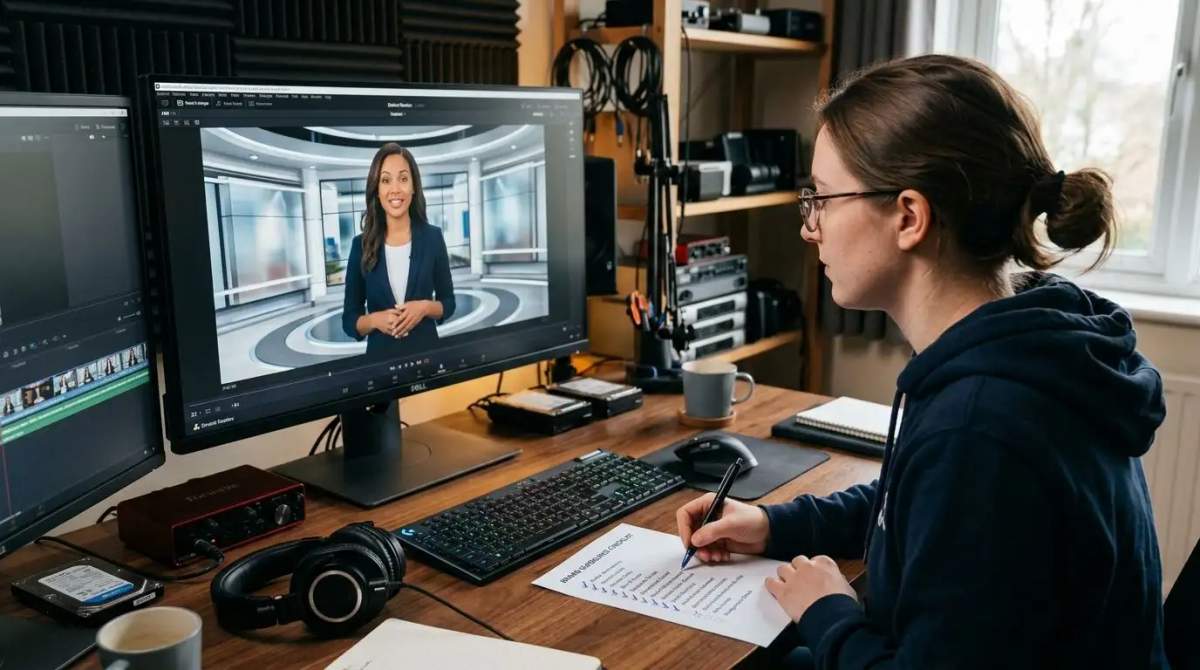
A simple checklist — tone, terminology, visual style, logo placement, color usage — reviewed against every finished video keeps output consistent even across a large batch.
3. Human review of AI output
Someone should watch every finished video before it ships, checking for unnatural pacing, awkward avatar delivery, or caption errors that automated generation can introduce.
4. A defined revision process
Quality control isn't just catching errors — it's having a clear path to fix them without derailing the production timeline.
5. Performance feedback loop
Reviewing how published content actually performs helps catch quality issues that weren't obvious in the review stage (weak hooks, confusing structure).
Common Quality Issues With AI-Generated Video
- Slightly unnatural avatar pacing or emphasis
- Caption timing that doesn't match speech rhythm
- Inconsistent tone across a batch of videos
- Generic-feeling scripts that don't reflect brand voice
- Overly literal translations in dubbed content
Building QC Into a Scaled Workflow
The mistake many brands make is treating quality control as a one-time setup step rather than an ongoing part of the workflow. As production volume increases, the review process needs to scale with it — a checklist that works for five videos a month may not hold up at twenty.
How ContentMesh Builds in Quality Control
Every video ContentMesh produces goes through human review before delivery — script accuracy, brand consistency, pacing, and caption quality — regardless of how much of the initial production used AI-assisted tools. Quality control isn't an optional add-on; it's built into the standard process.
Final Thoughts
AI makes video production faster, but speed without quality control just means producing inconsistent content faster. A real review process — at the script stage and the finished-video stage — is what keeps scaled AI video production actually on-brand.
Ready to Scale Your Brand with Custom AI Video Production?
Let ContentMesh build high-performing AI video ads, product showcases, animations, or custom avatars for your brand.