
 NAVISH NOOR· Aug 5, 2026
Traditional spokesperson videos have long been a core part of advertising, corporate communication, product demos, and training content. Typically, a company hires a presenter or actor, schedules a shoot, prepares a location or studio, records footage, and then moves into post-production.
While effective, this process is often expensive, time-consuming, and difficult to scale.
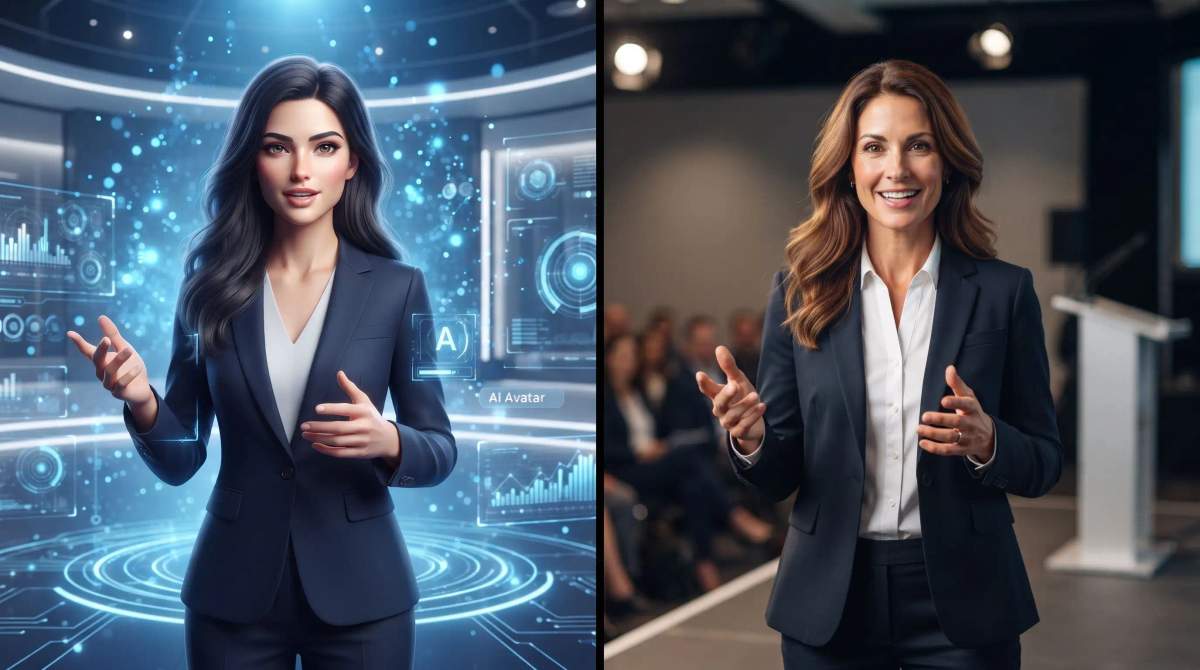
Today, AI avatar video services are offering a new alternative.
With AI avatars, businesses can generate presenter-led videos from scripts without organizing a physical shoot each time. A digital presenter delivers the message with synchronized voice, facial expressions, and branded visuals. This makes AI avatars especially useful for companies producing large volumes of marketing, educational, training, or social content.
This does not mean traditional spokespersons are disappearing. Instead, AI avatars are becoming a practical option for content where speed, consistency, localization, and scalability matter more than a real person on camera.
What Is an AI Avatar Video?
An AI avatar video uses artificial intelligence to create a digital presenter that delivers a written script.
Depending on the system, the avatar may appear as a realistic human, stylized character, or branded digital persona. The AI generates speech, facial movement, and gestures to simulate a presenter.
Instead of filming a new spokesperson each time, brands can reuse the same digital identity across many videos.
For example, a company might use one AI presenter for:
- Product tutorials
- Training videos
- Social media content
- Customer onboarding
- FAQs
- Marketing campaigns
This turns the avatar into a reusable asset within a content system.
Why Brands Are Shifting Away From Traditional Spokespersons
The issue is not the effectiveness of real presenters—it is the production process.
Traditional video requires scheduling, filming, editing, and often reshoots for updates or corrections. This becomes inefficient when producing content at scale.
AI avatars change this model by allowing video creation directly from scripts.
1. Faster production
Traditional filming depends on availability and logistics. AI avatar videos can be generated once a script is ready.
This is especially useful for companies producing large volumes of content or multiple variations of the same message.
2. Easier updates
If product information changes, traditional videos may need to be reshot. With AI avatars, the script can be updated and regenerated quickly.
This is particularly valuable for SaaS, tech, and fast-changing products.
3. Consistent branding
Human presenters vary in tone, delivery, and appearance. AI avatars provide a consistent visual identity across all videos, helping maintain brand uniformity.
4. Multilingual content
AI workflows can generate multiple language versions of the same video, reducing the need for separate filming sessions in each market.
AI Avatars vs. Real Spokespersons
The key question is not which is better, but which is more appropriate.
Real spokespersons are ideal for:
- Emotional storytelling
- High-end brand campaigns
- Executive messaging
- Authentic human connection
AI avatars are better suited for:
- High-volume content
- Frequent updates
- Training and education
- Product explanations
- Multilingual distribution
- Scalable marketing systems
Many companies will use both depending on the use case.
Where AI Avatar Videos Work Best
AI avatars are most effective when the focus is information delivery rather than emotional performance.
Product demos
Ideal for explaining features and workflows, especially for software that changes frequently.
Training and onboarding
Ensures consistent messaging across all employees without repeated filming.
Educational content
Useful for courses, tutorials, and structured learning materials.
Social media content
Supports high-volume short-form content across platforms like TikTok, Instagram, and LinkedIn.
Customer support
Can turn FAQs into short, easy-to-understand videos.
Internal communication
Useful for announcements, policy updates, and recurring company messages.
The Economics of AI Avatar Production
Traditional video production includes costs for presenters, crews, equipment, locations, editing, and reshoots.
AI avatar production reduces many of these requirements, shifting the model from:
One shoot = one video
to:
One system = many videos
However, quality still depends on human input for scripting, direction, editing, and brand alignment.
The real advantage is scalability, not just cost reduction.
AI Avatars as a Content System
The biggest shift is the ability to build a repeatable production system.
Instead of treating each video as a separate project, brands can reuse:
- Presenter identity
- Voice style
- Templates
- Graphics
- Intros and outros
- Script frameworks
- Brand visuals
This turns video production into an ongoing infrastructure rather than isolated campaigns.
What Makes a Good AI Avatar Video?
Technology alone is not enough. Strong content still depends on fundamentals.
Strong scripting
Clear, direct messaging is essential. Effective videos quickly identify a problem and solution.
Natural delivery
Even with AI voices, pacing and pronunciation must be reviewed to ensure clarity and realism.
Visual support
Avatars should be combined with:
- Screen recordings
- Product visuals
- Motion graphics
- Captions
- Animations
Short, focused content
Attention spans remain limited, so clarity and brevity are key.
Human Oversight Still Matters
AI can generate video, but humans are still needed for:
- Strategy
- Storytelling
- Scriptwriting
- Brand direction
- Quality control
- Fact checking
The best results come from combining AI efficiency with human creativity.
Are AI Avatar Videos Authentic?
Authenticity depends on transparency and use case.
Using AI avatars for educational or instructional content is generally accepted when clearly presented. However, misleading audiences about identity or using likenesses without permission can create trust issues.
Ethical use and disclosure are important.
How AI Avatars Fit Into a Video Strategy
AI avatars work best as part of a broader content system.
A single product launch can generate:
- Long-form explainer videos
- Short social clips
- Ads with different hooks
- FAQ videos
- Sales enablement content
- Onboarding materials
This multiplies the value of one production effort.
Choosing an AI Avatar Video Service
When evaluating providers, consider more than realism.
Look at:
- Voice quality and language support
- Customization options
- Editing and motion graphics capabilities
- Multi-format output (vertical, square, landscape)
- Scalability for large content volumes
- Human creative support
The Future of AI Spokespersons
AI avatars will not fully replace human presenters. Instead, they will expand what a “spokesperson” can be.
Humans will remain central to high-impact campaigns, while AI avatars handle scalable, repeatable, and instructional content.
The future is not AI vs humans—it is choosing the right tool for the right message.
Final Thoughts
AI avatar videos are reshaping how businesses produce spokesperson-led content.
They reduce production friction, improve scalability, and make it easier to update and localize content. However, they are not a replacement for strong storytelling or creative strategy.
The most effective approach combines AI efficiency with human direction.
This is where AI video production services become valuable—not just for generating videos, but for building a scalable content system.
For brands looking to expand their video output, AI avatars offer a practical way to turn ideas into consistent, multi-format content at scale.
Ready to Scale Your Brand with Custom AI Video Production?
Let ContentMesh build high-performing AI video ads, product showcases, animations, or custom avatars for your brand.